Sunday, March 1, 2009

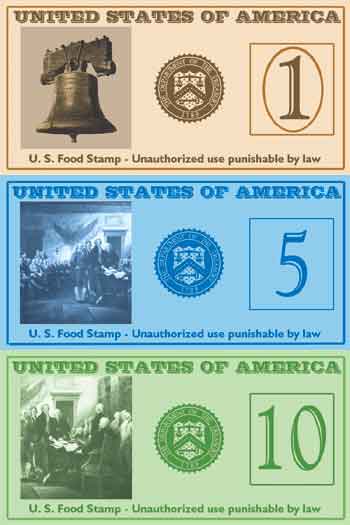
$176 in One Month


As part of an experiment, a CNN reporter tested himself and his budgeting skills. He was going to last one month surviving only on government provided money. He could spend only $176 during this entire month, and he learned what it was like to be in a position without privilege. He said that the hardest part about living on well-fare is making sure that you leave yourself enough food for the next meal. He was very meticulous about his spending, and had to re-train himself in the kitchen.

This man of privilege was able to experience the lifestyle a less fortunate person. It was very shocking and humbling to see how much of a struggle it is for families to live like this. Many people wrote on the reporters blog saying how $176 was a fortune relatively speaking. It was also a bit unsettling to see the nutritional challenges that less fortunate people have to go through. Getting enough protein proved to be difficult during the month. It is very humbling to see this man living off what a New Trier student might spend on lunch in a given day. This scenario gave me a bit of a reality check on the poverty situation.

Monday, February 23, 2009

Meat Inspection


In class, we started reading excerpts from Upton Sinclair's The Jungle. I also read this book for my junior theme, and it taught me to not allow myself to be reassured too easily. In the book, Jurgis observes the world of meat packing in great detail. One of the most surprising things for him is the informality of the inspection of the meat. He observed how the inspectors would stop examining the meat for minutes at a time while animals were still passing through. The Inspectors were supposed to be there to make sure that unsanitary meat did not pass through, but sanitary is the last thing that I would call the whole system. Jurgis told how rats, feces, sewage, and even nails would make there way into the product. After reading this book, I realized that many titles of safety could just be for the purpose of reassurance.

On that note, I was watching a youtube video about meat inspection. You see a white man in a lab coat speaking very generally about how the modern day inspections work. He never really goes into great detail about how inspectors do what they do. I am not saying that modern day meat qualities are bad, or even close to that of the early 1900's. The Jungle merely taught me to think on my own rather than eating up what some man is saying. I would like to see what really goes on in these modern day inspections.

Monday, February 16, 2009

Is This Really That Important?


We've all heard about the Michael Phelps ordeal in the last two weeks; the press have been talking about it non stop. I was looking over CNN and I saw a headline on the case. Apparently, there is not enough evidence to charge Phelps, and also he only admitted to being sorry for his "inappropriate behavior". I realize that an Olympic athlete should not be smoking marijuana, much less get photographed while doing it, but is this really that much important?
Go to any high school or college campus and you will see worse actions than what Phelps did. I feel that it really should not be on the level of national news. Why hasn't the Los Angeles train station shooting been in the media for some time? That instance is arguably one of the worst examples of police brutality. All that I've seen were the initial reports that came shortly after the event. Maybe the media should focus on issues that are of a more serious nature than an athlete getting high.

Monday, February 9, 2009

Hummer, if you can then maybe you will?


I was looking on youtube for car commercials, and I came across one that was very ironic. For about a minute, you see two young men driving around on beautiful mountainous, snowy landscapes. You get an idea of the capabilities of the car, and the things it can do are actually very impressive, but then I stopped to think. The reason that such marvelous landscapes are deteriorating around the world is because of cars like hummers that produce so much carbon dioxide and other greenhouse gases. Then the slogan is just priceless, "if you can, maybe you will"; I find this entertaining because of its lack of logic. If everyone drove hummers, we would not be able to go drive in the snow would we? Hummer did a great job here of appealing to the public with the positives of their vehicle. The commercial makes sure that the public knows how much the hummer can do that others cannot, but a pretty poor job of stating the downsides. For example, a hummer h2 receives fuel estimates of 10 mpg in 9 mpg in the city. Hummers have clearly been romanticized into the ultimate fun-mobile, but they actually are very harmful to the planet, and are extremely expensive.

Sunday, January 25, 2009

Where Do We Start?


Our first African-American president, Barack Obama, is finally in office. Having been elected during a fierce economic crisis, he hopes and plans to get to work quickly on fixing the nations economic problems. He urges the enactment of an 825 billion dollar stimulus package, one of its goals to create 4 million new jobs. This all sounds like good news, but there are many skeptical people who are not quite convinced. Resulting of a national pole, only 13 percent of people believe that the economy will recover in the next year, 27 percent believe it will take up to 2 years, and 59 percent believe it will take more than 2 years. Also, there are some worries in Washington. Kent Conrad (Democrat), the senate budget committee chairman, feels that this package is heavily needed, but questions certain numbers regarding financial sectors and housing. He said "if we don't get those two right, we're not going to see the kind of lift out of this downturn that we need".
This situation seems to dram my attention to FDR. Elected during the Great Depression, he too had to make change quickly. Much of his changes were the products of experimentation. What aided him to make change were his auxiliary powers that prevented time wasting opposition in the government. By the looks of public opinion, and even the opinions in Washington, it seems that president Obama might experience some drag in his efforts to lift America out of crisis. Should he be granted auxiliary powers?

Sunday, December 14, 2008

Progress in the Justice System?


I was looking over CNN.com and came across a somewhat disturbing story. Ameneh Bahrami, an Iranian woman, was blinded by a young man named Majid in 2004. He admitted to attacking her with acid, but says that they are in love and he wishes to marry her. Ameneh said that this was not the case, and if he were to be let off, he would surely kill her. Also, Majid's mother tried to form an arranged marriage between the two, and when she said no, the problems began. The most interesting part of this case is Ameneh's want for justice. She said that, "I am not willing to get blood money from the defendant, who is still thinking about destroying me and wants to take my eyes out". Rather than receiving financial compensation for her suffering, she wants a more sinister brand of justice. She urged to the courts of Tehran that her attacker should be blinded with acid as well. She based this off Islamic law; an eye for an eye. Shockingly enough, the panel voted unanimously for the sentence. He is to be blinded by acid, but not to have his face deformed as she did. When asked about her reasoning for not demanding Majid's face to be mutilated, she stated that, "Of course, only blind him and take his eyes, because I cannot behave the way he did and ask for acid to be thrown in his face".

This whole situation concerns me. Perhaps a more appropriate quote for this situation ought to be that, "an eye for an eye makes the whole world blind". I cannot believe that the courts actually voted in such a way. Even more appalling is that Ameneh claims that she is not behaving as Majid did, but she demanded that his eyes be destroyed by acid. Either the judicial system in Iran is insanely corrupted, or personal ethics has gone astray. Progress does not simply apply to the individual nation, but the human race as a whole. I guess this "opens our eyes" a little bit. Many think that the justice systems have, internationally, improved. I thought so until I saw this headline. I believe, now, that progress hasn't been truly made throughout the world.

Sunday, December 7, 2008

Taxpayers Finally Catching A Break


Gas prices have officially dropped to an average of $1.75 a gallon. This is a record low since March of 2004. The decreased demand for gasoline has caused the prices to go down significantly. It seems that the hard working taxpayers are catching a bit of a break. People have been making the effort to cut costs on certain luxuries in order to secure the necessities. Based on the current price of gasoline, I would say that many people are doing their part.

Both R.W Emerson and H.D Thoreau detailed the concepts of materialism, and how the stuff you own can own you. They thought that life is not about who has the fanciest car, house, etc. I feel that many people are starting to pick up these ideas because of the current economic situation. Driving as a means of transportation to work, the grocery store, and other activities is a necessity, but a lot of it is rather pointless. I have witnessed this first hand. I cannot tell you how many times my friends and I have spent great amounts of time just driving around, listening to music, in our gas guzzling suv's. Even though we live in a very prosperous area, this trend has changed, and as a direct effect of the economic situation. Parents are no longer paying for their children to drive their cars any longer. Because of this, teenagers are simply not driving as much. From the lower ends of society, all the way up to the higher, people are making changes to compensate for our delicate economy. As a direct effect of the taxpayers efforts, gasoline is now more affordable than in the last 5 years. Emerson and Thoreau would be proud of this change, and perhaps amazed in the national effort to make the change.