Sunday, April 26, 2009

Collateral Damage


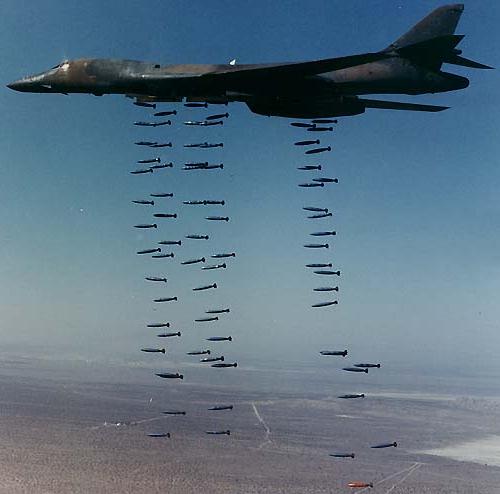
In class, we started talking about the strategies used in world war II. Bombing, and in many cases of civilians, was one of the most prominent and deadly strategies used by both the axis and allies. We had to ask ourselves the question though; Is the bombing of civilians ever an acceptable action during war? Everyone has their own opinion, but I noticed an interesting parallel.

On April 24th, one of the most deadly acts of suicide bombing occurred in Iraq. A total of 60 people died. The bombers were two women who walked into a crowd on Friday, the Muslim holy day, with grenades and other explosives. This type of civilian bombing may be a little different, but I think the same questions can be asked. Is the best way to express a feeling to a group of power attacking civilians? The civilians are targeted because they are relatively easy to do so. Extremists such as these women do this because they may believe that they can use fear to get the results that they want. I then thought, Is this true of every type of bombing, military or otherwise? When a military attacks civilians with bombs, the immediate effect of that is fear. With a population of fearful people, the general consensus might be to give into the other countries demands. So then is military bombing of civilians also considered terrorism?

Another question I thought of was about defense. It is impossible to check every person when they go into high population areas, and what could two women possibly do right? We have seen this as a trend; women and children have often taken their own lives in this fashion. However, the majority of women and children are not suicide bombers. So how do we defend ourselves? What draws the line between total governmental control over public behavior and safety? The bombing of civilians may or may not be an appropriate action, but it is for sure that it is becoming harder to combat.

Sunday, April 19, 2009

So What Have We Accomplished?


Every day we are reminded about the war in Iraq and Afghanistan. When Obama was elected, he said that we will be out of Iraq in the near future. The administration has made plans regarding the withdrawal of American troops. However, another 83 billion dollars has been requested to supply our troops with new equipment and other aid through September. Also, Obama has sent another 17,000 troops to Iraq and Afghanistan, along with another 4000 to train Afghani troops. We are spending more money in this war and sending in more troops. I am not saying that this is wrong, but have we really accomplished anything, and was it worth it?

In class we talked about some of the main reasons for going to war. Some of these reasons are to defend the existence of democracy, and to protect every man's human rights. It is clear that America was provoked and shocked by the events of September 11th, but is there any reason to continue for another two years? We have set up a government led by local officials, and have trained troops to combat the taliban, but have the American interests been realised. What more are we looking for in our continued presence for another two years?

Sunday, April 12, 2009

The Youtube Opportunity


Our class recently did a video conference with a historical museum in Cleveland. We all found it to be new and interesting, and most of us had never participated in one yet. I saw a video on CNN that made me think of our conference. There was a sort of competition where 3000 people from around the world submitted youtube video's displaying their skills in playing classical music. Professionals chose the top 200 musicians, and then youtube viewers voted on the 96 people that would join the orchestra to play at Carnegie Hall. On top of this, Google, the owner of youtube, will pay for the travel costs of all the musicians.

The finalists were beside themselves. The common belief was that they would never have made it to Carnegie, "the pinnacle of achivement for classical musicians", without the use of youtube to publicize their skills because they are not at the professional level. Programs like this will both broaden the talent in the classical music world, and provide much more opportunity for musicians. This shows that technology really can make a huge difference in the success of many people. Investing in communications such as video conferencing could really do a lot of good for our country, especially in the shape we are in right now.

Sunday, April 5, 2009

Even the CEO's are feeling it


Over the past year, we have heard many story's of people getting their salaries slashed, losing hours, or even losing their jobs. The unemployment rate in America is about 8 percent, as compared to the ideal 3 percent. People from all areas are furious about the current situation. Big corporations that received aid from the bailout plan, such as AIG, have been subject to ridicule for some time because of the controversial nature of their bonus system, and how they used the money from the bailout. I was looking over CNN, and I saw an article that showed me something that I thought many people would like.

The average earnings of chief executives of American corporations fell about 5 percent from last year. This is the first year in five that the average annual income of these executives has fallen. These statistics may help to settle some of the anger that looms everywhere in this current situation. I find it noble that CEO's, while their companies may be having trouble, are cutting into their own earnings. Perhaps they have realized that a few million dollars less each year would not harm anyone. It is also a good thing to see that the execs are not running their companies into the ground so that they can still receive an enormous payment. Maybe this decrease will produce positive effects later on...

Sunday, March 8, 2009

If You Buy It, Then...

After spending some time in class about the subtle details of advertisements that many of us do not notice, I went to youtube and found some interesting new adds. I came across a commercial for vitamin water that was actually banned. In the commercial, it shows two Bears playing football, and then Brian Urlacher comes up and tackles one of the bears. Then it pans to him drinking some vitamin water. Finally, a man says "power of nature" and then on the screen it says "It works, for Brian Urlacher".

The logic in this commercial is somewhat odd. Usually in sports drinks commercials, you see some explanation for why the drink is good and how it helps you perform at your peak. This, however, seems to get lazy. The only justification for the quality of their product is that it works for Urlacher, so it must be good. Although I find the commercial to be funny, when I take a deeper look I am not very drawn to drink vitamin water. Have advertisement agencies been getting lazy?

Sunday, March 1, 2009

$176 in One Month


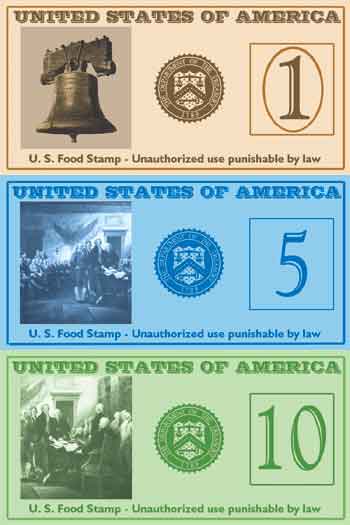
As part of an experiment, a CNN reporter tested himself and his budgeting skills. He was going to last one month surviving only on government provided money. He could spend only $176 during this entire month, and he learned what it was like to be in a position without privilege. He said that the hardest part about living on well-fare is making sure that you leave yourself enough food for the next meal. He was very meticulous about his spending, and had to re-train himself in the kitchen.

This man of privilege was able to experience the lifestyle a less fortunate person. It was very shocking and humbling to see how much of a struggle it is for families to live like this. Many people wrote on the reporters blog saying how $176 was a fortune relatively speaking. It was also a bit unsettling to see the nutritional challenges that less fortunate people have to go through. Getting enough protein proved to be difficult during the month. It is very humbling to see this man living off what a New Trier student might spend on lunch in a given day. This scenario gave me a bit of a reality check on the poverty situation.

Monday, February 23, 2009

Meat Inspection


In class, we started reading excerpts from Upton Sinclair's The Jungle. I also read this book for my junior theme, and it taught me to not allow myself to be reassured too easily. In the book, Jurgis observes the world of meat packing in great detail. One of the most surprising things for him is the informality of the inspection of the meat. He observed how the inspectors would stop examining the meat for minutes at a time while animals were still passing through. The Inspectors were supposed to be there to make sure that unsanitary meat did not pass through, but sanitary is the last thing that I would call the whole system. Jurgis told how rats, feces, sewage, and even nails would make there way into the product. After reading this book, I realized that many titles of safety could just be for the purpose of reassurance.

On that note, I was watching a youtube video about meat inspection. You see a white man in a lab coat speaking very generally about how the modern day inspections work. He never really goes into great detail about how inspectors do what they do. I am not saying that modern day meat qualities are bad, or even close to that of the early 1900's. The Jungle merely taught me to think on my own rather than eating up what some man is saying. I would like to see what really goes on in these modern day inspections.